Kaiju (Japanese: 怪獣 かいじゅう, Hepburn: kaijū; lit. 'strange beast'; Japanese pronunciation: [kai (d)ʑɯː]) is a Japanese term that is commonly associated with media involving giant monsters.
We are currently working on over 3,220 articles and we welcome your contributions. You can check out the new pages, recent changes, and statistics. Need help? Please visit our Help section. Questions? If you've got questions you can ask any administrator, post them in the main page discussion, or you can simply visit our forum and ask there.
This list was originally published on March 28, 2024. Troll 2 is now streaming on Netflix. There’s no question that Godzilla and King Kong are kaiju A-listers. Whenever the King of the Monsters ...
Kaiju (Japanese: 怪獣, Hepburn: Kaijū, lit. 'Strange Beast') is a Japanese term that is commonly associated with media involving giant monsters. A subgenre of science fiction, it was created by Eiji Tsuburaya and Ishirō Honda.
For nearly seven decades, Godzilla and the other kaiju have kept audiences at the edge of their seats. Kaiju represent the larger-than-life dangers we face as humans, such as nuclear war and alien invasions, as well as the unstoppable power of nature itself.
The book explores kaiju’s lasting legacy, from its roots in post-war Japan to its influence on Hollywood directors like Steven Spielberg. This visually stunning and nostalgic guide appeals to both newcomers and die-hard fans, making it an essential addition to any kaiju collection.
In pure fan-terminology context, a kaijū is any creature that is significantly large in scale. Kaiju as a word also refers to the genre of media that includes these giant creatures. The origins of the term are hard to trace, and can be found in early Japanese literature and folklore.
Kaiju (怪獣 kaijū?) is a Japanese word that literally translates to "strange creature". However, the word kaiju has been translated and defined in English as "monster". Specifically, it is used to refer to a genre of tokusatsu entertainment.
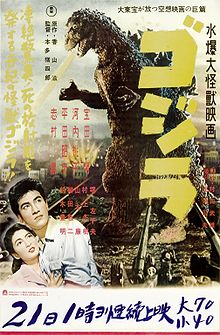 Kaiju (Japanese: 怪獣 かいじゅう, Hepburn: kaijū; lit. 'strange beast'; Japanese pronunciation: [kai (d)ʑɯː]) is a Japanese term that is commonly associated with media involving giant monsters.